
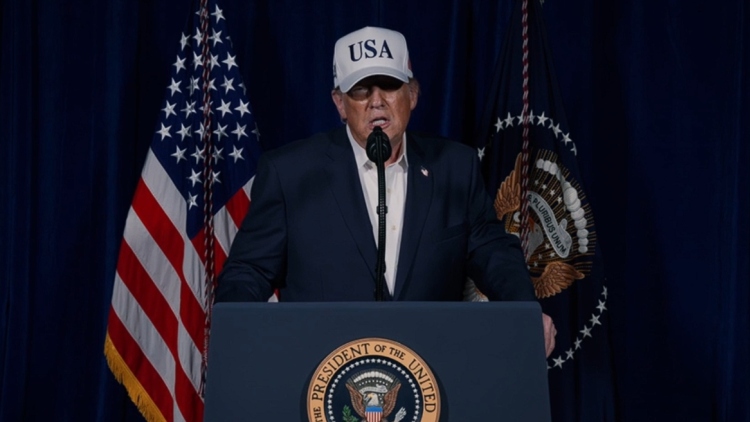
Trump’s declaration of war on Iran:
We will destroy their missile industry, they will never have nukes.
He called on the Revolutionary Guards to lay down their weapons and added: “To the great, proud people of Iran, I say tonight that your time for freedom has come.”
History does not act as an avenger; it acts as a mirror.
Those who choose to govern through force rather than restraint will eventually confront their reflection in the consequences of their own decisions.
Leaders change. Imperial illusions fade.
What remains is the cost — human, moral, geopolitical.
The question is not whether hubris is punished.
The question is who will pay the price.
And it is rarely those who commit it.
________
In ancient Greece, Hybris — as the worst of sins — was the fear and dread of people in power because committing Hybris inevitably brought dire and inescapable punishment. Only the thoughtless, inconsiderate and arrogant dared to commit such a “crime.”
Donald Trump embodies all the traits of a reckless and arrogant leader. Therefore, committing Hybris on his part was inevitable and irreversible by historical necessity.
In terms of historical analogy, Trump has the same temperament and psyche as figures history recognizes as afflicted with a Creon-like syndrome of mental disorder: arrogance, pride, and insolence.
Alcibiades the Athenian, Alexander the Great, and in modern history Napoleon, Hitler, Stalin — and today Putin and Trump — belong to the same category of “patients.”
We can conclude historically and proportionally that the current recklessness of the two allies, Netanyahu and Trump, to attack the “Holy Ayatollahs” was an act of folly and arrogant display of power, which constitutes the crime of Hybris. This is the new doctrine of modern powers, represented by Putin and Trump: “Right is the power of the one who holds it.”
History declares that both reckless leaders, after this foolish—even paranoid—undertaking, will be crushed. It will be relentless punishment as a consequence of their continuous and unceasing Hybris.
Trump, with the new attack he launched now on Iran, signed the beginning of his end. And it will be painful — not only for himself but for the Americans who will pay dearly for the folly of their president.
Arrogant Trump, as someone devoid of historical awareness, forgot that Iran is not Iraq or Libya of decades past. That means if, after this arrogant attack, he does not “come to his senses” and remove his forces from this dangerous ground dominated by a fanatic but organized and determined crowd of Islamists, self-styled “Guardians of the Revolution” — Iran will become a tomb for Americans. The new Vietnam for them.
📌 Diotima:
“The Escalation Against Iran — A Critical Perspective”
In February 2026, the United States and Israel initiated a major military operation against Iran, known publicly as Operation Lion’s Roar, involving coordinated strikes against Iranian cities and military infrastructure.
This escalation follows months of rising tensions over Tehran’s nuclear and missile programs, failed diplomatic talks, and repeated threats from both sides.
At its core, this military action represents a return to classic power politics — a worldview where strength, not law or diplomacy, determines what is “right.” Such a worldview echoes dark chapters of history where pre-emptive force was used to enforce geopolitical aims without broad international consensus.
Crucially, the intervention raises several fundamental issues:
-
Legitimacy: There is no clear global mandate or unified international backing for this action. It bypasses critical frameworks of international law and accountability.
-
Historical precedents: Past interventions in the region, whether Iraq, Libya or Afghanistan, show that superior firepower often begets prolonged instability, loss of life and geopolitical backlash.
-
Escalation risk: The conflict is already spreading beyond initial points of impact, with missile exchanges and potential alliances dragged in, worsening regional volatility.
-
Costs and consequences: Beyond immediate battlefield effects, there are long-term strategic, economic, and humanitarian repercussions that will likely outlast any short-term tactical gains.