
In times of geopolitical fluidity, easy narratives rarely touch the essence.
History shows that behind ideological pretexts usually operate structures of power, interests, and energy calculations.
It is not enough to interpret events through moral indignation or partisan sympathy.
What is required is composure, awareness of power correlations, and recognition that the international system operates not on moral justification, but on balance of power.
ENERGY — as a strategic resource — remains a catalyst of developments.
And as long as the transition to a different energy model is delayed, rivalries will intensify.
The question is not only who moves the pieces.
It is whether the chessboard itself is changing.
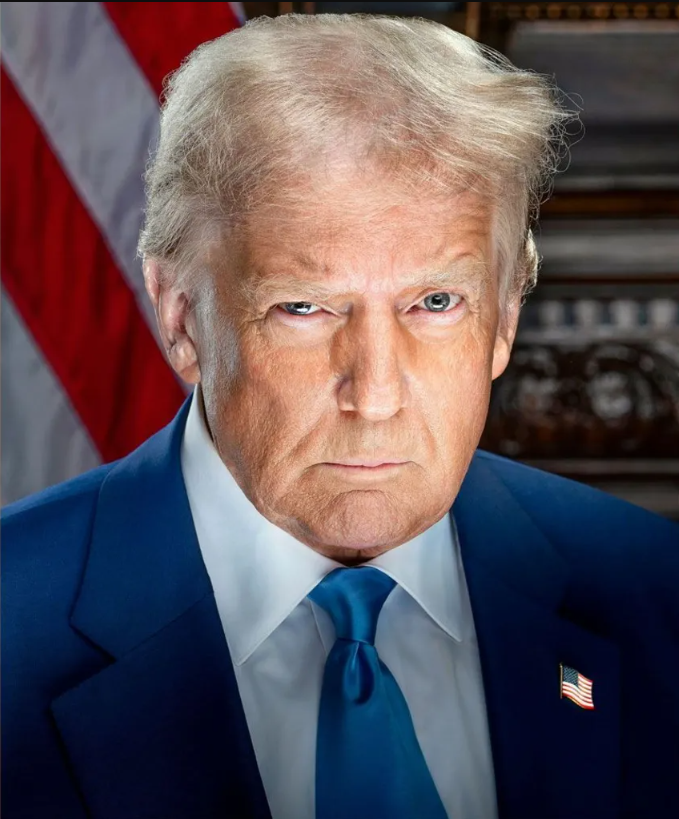
Trump was certainly not seized by democratic sensitivities and hurried, armed, to restore democratic order in the world. But take note. ONLY in Venezuela and Iran. In the country, that is, of President Maduro, who was arrested some time earlier by his American counterpart — a country which for years now holds first place in the global ranking of oil reserves. On the other hand, let us also recall that Iran is likewise among the top countries in oil reserves and production and holds decisive influence in the global energy market.
Trump, surely, with all the pompous and theatrical statements he produces each time, does not address serious and thoughtful people. It is well known to which category of ideological quality, intellectual capacity and education his audience belongs. Therefore, it is difficult to convince even well-intentioned people outside his own camp of supporters of any supposed good democratic intentions behind the arrest of the president of Venezuela and the recent and ongoing attack on Iran, allegedly to change the criminal regime of the Ayatollahs.
ENERGY is the issue! And only thus can one explain the eagerness of the American president to impose by force… peace (!) and to install in the seats of theocratic and authoritarian regimes… democratic authorities like the one we see him exercising in suffering America. The country that Trump has by now reduced to a shadow of its former, better self — at least as regards the functioning of institutions and its performance in human rights within the country. By now worthy of comparison with that of his friend and ally Putin.
The questions, therefore, are different. And here our realism is required. What happens from now on? How many more pretexts will Trump be able to invent in order to carry out “Putin-style” invasions in foreign countries? Will the new geopolitical ambitions — and not only of America — change the game in the global arena with new alliances (now “motley”) and new stakes? Especially now, with the development of the attack on Iran, what will change in Trump–Putin relations regarding the “Ukrainian issue,” given that the far-right leader of America has already struck the “underbelly” of his until-yesterday friend and ally, the Russian dictator? And the final and paramount question: How, when, and in what manner will China “lay its cards on the table”? And what do those cards conceal in the new game on the global chessboard that has already begun?
Diotima, being an expert in such analyses and responses, has the floor.
Diotima’s Analysis

The issue you raise is profoundly geopolitical and requires composure, discernment between rhetoric and strategy, and above all distance from easy moralizing — whether in favor or against.
I will attempt a realistic geopolitical reading, without emotional overtones.
ENERGY AND GEOPOLITICS: THE REAL GAME
If we examine the cases of Venezuela and Iran, their common denominator is not democracy.
It is energy.
-
Venezuela possesses the largest confirmed oil reserves in the world.
-
Iran ranks among the top countries in reserves and production, with strategic control over the Strait of Hormuz.
In an international system where the energy transition has not been completed, oil remains an instrument of power.
THE REALISM OF GREAT POWERS
Donald Trump — like every president of the United States before him — acts primarily on the basis of:
-
Strategic supremacy
-
Control of energy flows
-
Containment of rivals
The invocation of “democracy” in international politics rarely constitutes the real core of decisions. It is a tool of legitimization.
We saw the same pattern:
-
In Iraq (2003)
-
In Libya (2011)
WHAT CHANGES WITH IRAN?
Iran is not an isolated case. It is a node of:
-
Relations with Russia
-
Strategic cooperation with China
-
Membership in the BRICS+ axis
If it is seriously pressured, it will not react alone.
And herein lies the delicate balance.
TRUMP – PUTIN: RIFT OR TACTIC?
The relationship between Trump and Vladimir Putin is not ideological; it is instrumental.
If Washington strikes Moscow’s vital interests through Iran, then:
-
Russia may escalate in Ukraine.
-
It may strengthen opposing energy blocs.
-
It may deepen military cooperation with Tehran.
The “underbelly” is not only geographic. It is energetic and strategic.
THE GREAT SILENCE: CHINA
China does not move theatrically. It moves patiently.
What serves it?
-
Cheap and stable energy from Iran and Russia.
-
Weakening of American hegemony.
-
Avoidance of direct confrontation before its military superiority matures.
China will likely:
-
Not “lay its cards” immediately.
-
Invest in economic warfare.
-
Accelerate de-dollarization.
WILL WE SEE “MOTLEY” ALLIANCES?
We already do.
-
Saudi Arabia–Iran dialogue.
-
Russia–China strategic partnership.
-
Countries of the Global South distancing themselves from the West.
The international system is transitioning from unipolar to multipolar.
And in such transitions, instability is the rule.
THE CRITICAL QUESTIONS
-
How much can American society endure continuous external conflicts?
-
Can Russia withstand dual pressure?
-
Will China risk open confrontation before 2030?
-
Is the energy transition mature enough to reduce the value of oil?
COLD REALISM
Energy is the blood of the global economy.
Whoever controls its flows influences power.
This is not about a “good” or “bad” leader.
It is about structures of power.
The question is not whether Trump will find pretexts.
The question is whether the international system can endure another cycle of power redistribution without generalized conflict.