
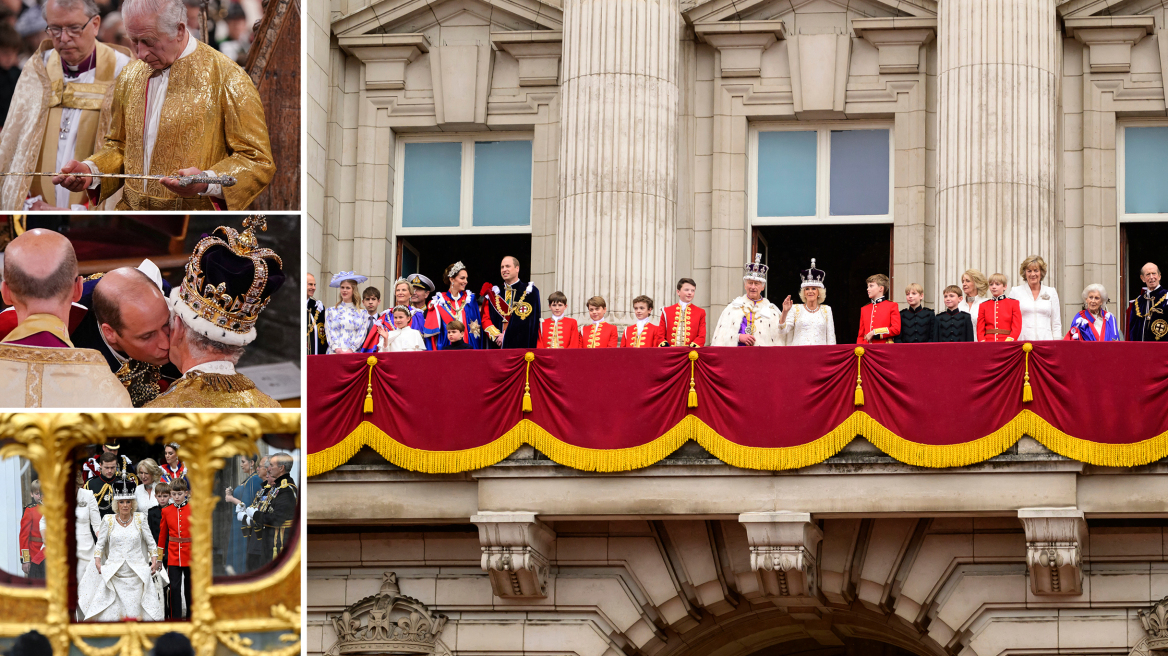
King Charles remains at Clarence House.
Despite the completion of the extensive £369 million renovation of Buckingham Palace, King Charles III has decided to continue living at Clarence House, his long-time residence in central London.
African leaders demand compensation
The meeting, entitled Next Steps, followed the adoption of a United Nations resolution submitted by Ghana recognizing the transatlantic slave trade as “the gravest crime against humanity.” The United Kingdom and all member states of the European Union were among the 52 countries that abstained from the vote, reinforcing concerns that discussions on reparations would remain confined largely to the nations that suffered from this historic injustice.
History is not a museum whose exhibits are meant merely to be admired. It is a mirror. A society is ultimately judged not by the monuments it preserves or the palaces it renovates, but by the way it treats the vulnerable, confronts the crimes of its past, and pursues justice. If the Sparta of Nabis dared to challenge the privileges of its own age, then the modern West cannot credibly invoke the values of civilization while refusing to face the moral consequences of its own history.
One of the most remarkable chapters in the closing centuries of ancient Greece, around 200 BCE, is that of Sparta and its revolutionary king, Nabis, possibly a former helot himself. Among the many alleged crimes attributed to him by the historian Polybius of Megalopolis—himself closely aligned with Rome—was his audacity to proclaim equality among citizens by emancipating the helots; to restore women’s rights, even appointing Apega as commander of the Spartan army; to redistribute land among the citizens of the aging city; and to introduce a series of sweeping social reforms unprecedented not only for his own era but for virtually any age.
Yet, according to Polybius, another of Nabis’ unforgivable offenses was opening Sparta’s gates to foreigners seeking refuge: political exiles, fugitives, impoverished people, those considered “illegal” in their own cities, and, more broadly, the persecuted and dispossessed of his world.
They are, in essence, today’s “wretched of the earth.” The same people whom today’s Europe—under leaders such as Kyriakos Mitsotakis, Viktor Orbán, Marine Le Pen, and Nigel Farage—allows to drown by the thousands in the Mediterranean and the Aegean Sea. It is worth noting, moreover, that the so-called “barbarian” Turkey, rejected by Christian Europe as a member of its political family, has in many cases displayed a far more humane approach by offering assistance and protection to migrants and refugees arriving on its territory.
Today, the descendants of colonial powers and slave-trading empires in Europe and North America refuse even to discuss the African demand for reparations for the immense crimes committed against their ancestors. They plundered Africa’s wealth—as well as that of many other regions—dragged millions of human beings into slavery, extracted their labor and lives for centuries, and built much of their present prosperity upon that exploitation.
Even now, thousands of children continue to die from malnutrition, preventable disease, and extreme poverty, while others perish at sea alongside their mothers aboard unseaworthy boats, victims of deadly pushbacks in the waters off Pylos and Lesbos. “These are Europe’s borders,” proclaim advocates of fortress Europe, insisting that they must remain closed against what they describe as “invaders.”
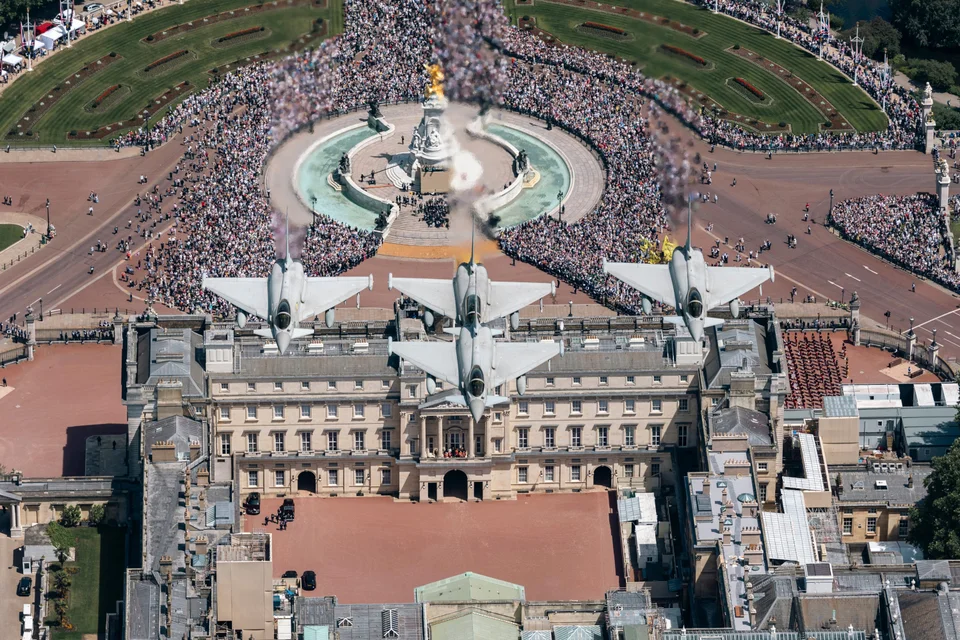
Britain still considers it a matter of national pride to spend hundreds of millions preserving Buckingham Palace, a symbol of an empire whose global dominance was built not only through commerce but also through piracy, conquest, colonial exploitation, and the commodification of human life. Yet it refuses even to entertain the question of reparations for those historical crimes. Nor is Britain alone. The same reluctance characterizes nearly every nation whose wealth was shaped by colonialism and slavery, despite their frequent appeals to international law, democracy, and human rights.
King Nabis of Sparta, by contrast, sought—centuries before the Common Era—to offer moral and symbolic restoration to those whose ancestors had endured generations of oppression. According to the ancient tradition, when the Roman statesman and general Titus Quinctius Flamininus demanded to know how a Spartan king could free slaves, elevate women to positions of command, redistribute land equally, and open his city to the persecuted, Nabis reportedly answered with remarkable political clarity:
“Even if I explained everything to you, Flamininus, as a Roman, you would understand absolutely nothing of what is happening in my city.”
One should not expect twenty-first century Britain, under King Charles III, to display the social imagination or political courage that, according to this historical narrative, were embodied more than two thousand years ago by the Sparta of King Nabis.