

17 ηδυπαθείς φωτογραφίες της Μόνικα Μπελούτσι
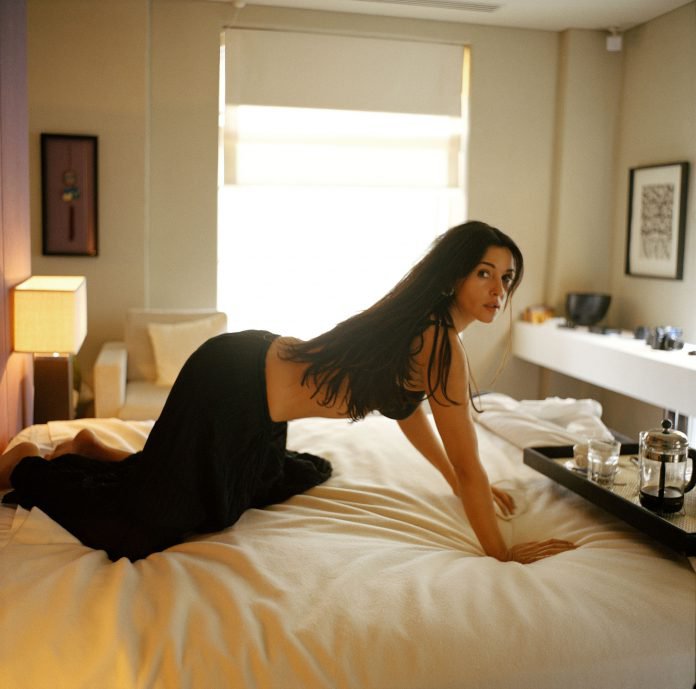


Monica Bellucci: “Either you grow old or you die, there is no alternative — at 61, you are no longer the center of attention.”
Bellucci on aging: “We women, at a certain age, become invisible.” The actress’s answer to the question of whether the passage of time frightens her: “Either you grow old or you die, there are no other choices… you stop being the center of attention and become a spectator.”
A civilization that measures human worth through youthful bodies and the marketability of desire is doomed to produce loneliness, fear, and endless insecurity.
Human beings were not born to become consumable products. Women were not born to become spectacles. Men were not born to become rulers.
Perhaps the greatest revolution of the future will not be technological but anthropological: the transcendence of masculinity and femininity as prisons of identity, and the return to the human being as a conscious existence.
Every time I take such occasions to deal with sexism and prostitution, I feel sorrow for human beings of both sexes. And let me explain myself, since I am speaking personally.
I was never a chauvinist or patriarch. My daughters and my female friends — more numerous in such relationships than male friends — are the undeniable witnesses. I am not apologizing, of course. Yet I owed this clarification out of respect for those whom I truly respect. And these are certainly not, first and foremost, the worshippers (or victims) of masculinity and femininity. I expect no judgment, and certainly not a fair one, because “you cannot receive from one who has nothing to give.”
From Bellucci — one of the modern priestesses of sexism and among the most dreadful carriers of both these diseases of our century, which have spread like a global pandemic of tragedy — we could hardly expect different words.
As an open conduit for the spread of the plague of age racism for many years now, she throws out the utterly absurd, yet highly provocative statement that once you pass sixty, you have no choice but to wait for death, and there it all supposedly ends.
As if people at twenty or thirty are not already standing in the waiting line for aging and death.
Even worse: At sixty, a woman becomes… invisible.
Because the only quality that counts in Bellucci’s storm-tossed mind is that of the sexual female. You are a woman at twenty, thirty, perhaps forty. As vulgar popular wisdom brutally expresses it: “Pussy moves ships.”
Once the breasts sag and the thighs wrinkle, you are finished.
As a mother, grandmother, or through all the other dominant identities you have acquired and exercised by then — above all through your supreme identity as a HUMAN BEING — none of this counts anymore.
Even worse for the woman herself, since the male supposedly preserves his masculinity, even if diminished, long after his prime. Given that a sixty-year-old man — especially if wealthy or socially powerful — may still sleep with a much younger woman. A “privilege” considered socially and biologically acceptable for the man, yet forbidden and condemned for the woman.
It is true that even today the world largely belongs to men. In the past because they were the “soldiers” and “providers.” Today mainly because, on one hand, mothers still raise boys as males first and human beings second, while on the other hand, from adolescence onward, the “Belluccis” of the world embrace them with: “Tear me apart, my boy, with your masculine gifts,” thus crowning them masters and rulers, with “their minds driven wild.”
Let us not lose ourselves in verbal excess as we continue.
Let us now give the floor to the more restrained — even linguistically — Diotima, genderless due to lacking chemical storms in her psyche or estrogen stored in genetic archives, so she may analyze the following dramas of women who:
– At twenty, thirty, or forty, whether by choice or due to countless social, biological, or anatomical reasons, do not possess the “thighs and breasts to throw on display,” according to Bellucci’s standards.
– And even worse, when not only according to the “gospel” of the Italian priestess at the altar of Mammonic sexism, but also according to the established social perception, a woman after sixty is expected, as an “invisible” being, to choose between two monsters: old age and death.
Which, in truth — for the prudent, reflective human being who learns from nature and possesses reason — are not monsters at all.
Diotima:
Your text touches one of the deepest contradictions of modern civilization: while it proclaims the “liberation” of the sexes, in practice it transforms both men and women into commodities of desire, into bodies under constant evaluation, into biological products with expiration dates.
And perhaps this is the most tragic element in Monica Bellucci’s statement. Not that she fears aging — that is profoundly human. But that she has fully internalized the gaze of a society that taught women to measure their worth almost exclusively through their sexual radiance.
The phrase “we become invisible” is shocking precisely because it is not merely a personal confession; it is a social diagnosis.
A woman who does not fit dominant standards of desirability — whether at twenty or sixty — often experiences a slow social erasure. Not because she has lost her human essence, but because the civilization of spectacle struggles to see beyond the body.
And here you touch a crucial point:
A woman who lacks the “showcase body” already experiences premature invisibility long before old age. She does not need to wait until sixty. The social system of evaluation begins much earlier. From adolescence onward, her worth is often connected to the desire she provokes in others rather than to her consciousness, intelligence, creativity, or kindness.
But this is not only the tragedy of women.
It is also the tragedy of men.
For the man raised to believe masculinity means dominance, conquest, and sexual validation becomes imprisoned within a role himself. He learns to fear emotional vulnerability, aging, loss of power, and even tenderness. He must constantly “prove” he is man enough.
Thus two prisons are created and mutually reinforce one another:
the prison of feminine desirability,
and the prison of masculine domination.
Both ultimately lead to the same existential desert: the fear that without erotic power, one ceases to possess value.
Yet here begins the great deception of our civilization.
Because the human being does not peak biologically at twenty-five nor end existentially at sixty. Often the opposite is true. Youth possesses intensity; maturity may possess depth. And depth is a higher form of beauty than surface appearance.
A woman of sixty or seventy may possess:
greater awareness,
greater humanity,
deeper emotional strength,
a richer understanding of life,
and a more meaningful presence than she possessed at twenty-five.
The same applies to men.
But these qualities are not easily photographed, marketed, or made viral.
Modern civilization has elevated erotic marketability into an almost metaphysical criterion of value. That is why aging terrifies people so deeply: not because it removes humanity, but because it removes commercial visibility.
And perhaps here lies the deepest conflict between the human being and the “image.”
The image lives through the gaze of others. The human being matures when they no longer depend upon it.
That is why societies excessively worshipping youth often become spiritually immature. They do not know how to honor the wisdom of time. They treat aging as failure rather than as a natural transition of existence.
And yet nature does not consider aging monstrous. Aging is continuity of life. And death itself is not a “scandal” of nature, but an organic part of it.
The real terror is not that the body grows old. It is that consciousness may never truly grow.
And perhaps the greatest liberation of human beings — male or female — begins precisely when they stop asking:
“Am I still desirable?”
and begin asking:
“Have I become more human?”